News
They’ve called Ormond Park home for 63 years and 1,240 people are fighting to save it
By Sacha Pisani28 August 2026
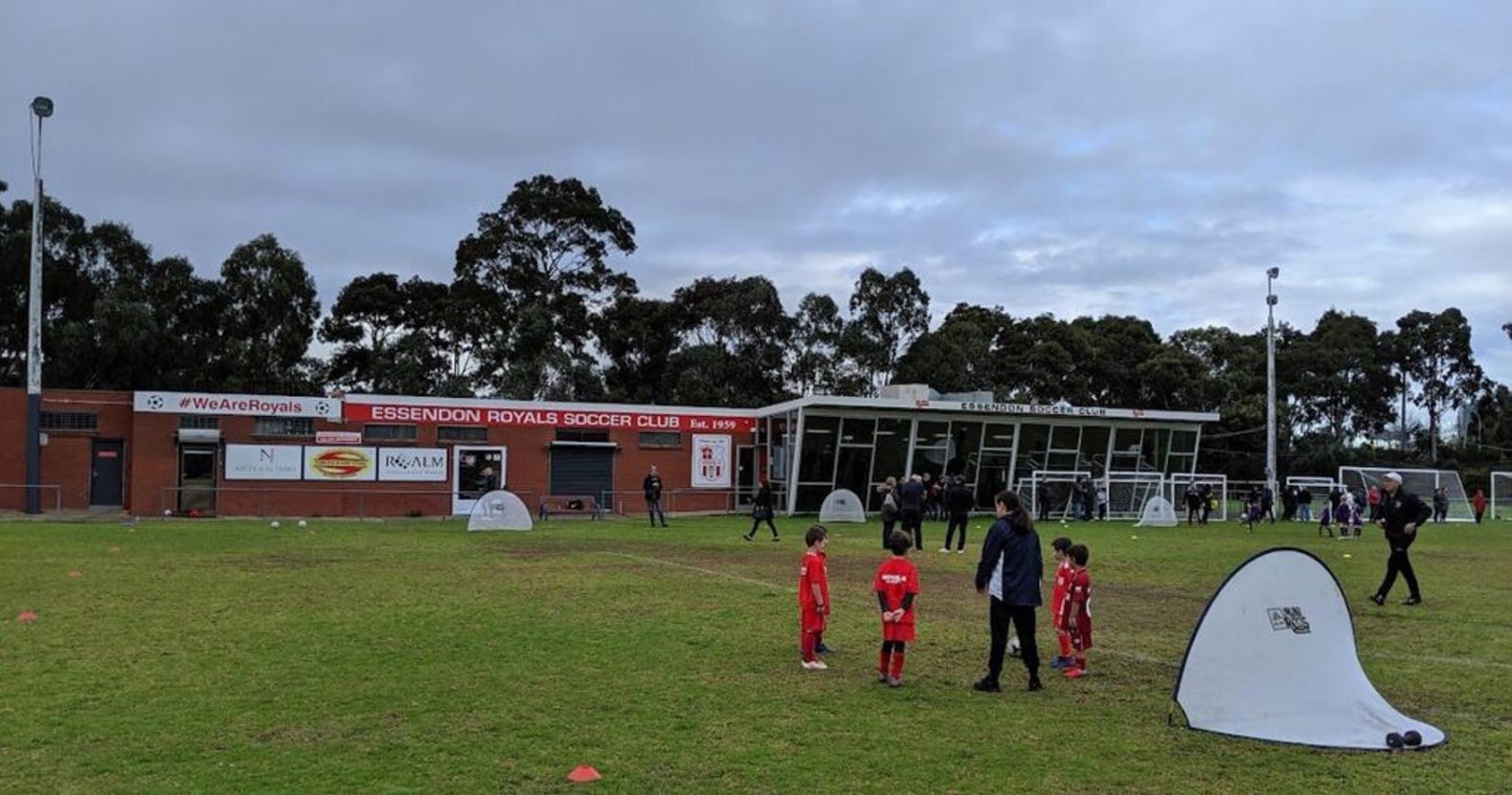
Essendon Royals’ fight to save their home of more than six decades has reached the doors of Moonee Valley City Council, and 1,240 people have now put their names behind it.
The Royals formally lodged their Save Ormond Park petition on Monday, before it was tabled at Tuesday night’s Council meeting by Cr Hamish Jones and referred to Council’s Chief Executive Officer for consideration.
Loading embed...
Instead, the council intends to demolish the pavilion, terminate the Royals’ tenancy and ground allocation at Ormond Park, and relocate teams to other grounds within the municipality after the 2026 season.
For one of Victoria’s biggest community football clubs, the stakes are enormous.
Essendon Royals cater for more than 1,000 players across 54 teams, and Ormond Park remains a crucial part of that operation. Thirteen teams play more than 90 home matches there each season, leaving more than 150 players - predominantly some of the club’s youngest - without equivalent Sunday match capacity under Council’s initial alternative allocation.
But this is also about 63 years of history. Royals members helped build the clubrooms and changing facilities in the late 1970s, while generations of players and families have grown up around Ormond Park. The club are now calling for the pavilion repair to be put to tender, no irreversible decision to be made before that process is publicly considered and the pitch to remain a football ground regardless of the pavilion’s future.
President Vitale Ferrante has now put the club’s case directly to the Mayor and Councillors.
Loading embed...
Here is the open letter in full:
“Dear Mayor and Councillors, Essendon Royals is deeply saddened to be facing the prospect of losing our home of more than sixty years,” Ferrante wrote.
“We have played at Ormond Park since 1963. Our own Members built the changing rooms and clubrooms there in the late 1970s with Council’s approval, and Council added to the building in the years that followed. It has been a shared effort from the start.
“Over sixty years that building has done a critical job for this community, and generations of families, many of them arriving in Melbourne with very little, have grown up around it.
“Losing it will hurt this club spiritually and it will hurt us operationally.”
“Ormond Park is our base. The clubrooms are where our annual general meeting is held, where our committee meets, where our registration days and our presentation days are run, and where our players are fitted for their kit. Our season starts in January and our winter allocation does not begin until 1 April, so pre-season trials and training have been carried there too.
“As it stands, this activity cannot be replicated anywhere else. The Ormond Park pavilion remains a much-loved home for our Members, irrespective of how small the ground we play on there has become.
“We are particularly disappointed by the first draft of the winter allocation Council presented to us, because it showed again that the role Ormond Park plays in this club is not understood.”
“The draft replaced the weeknight training hours we currently use at Ormond Park and then exceeded them, which we acknowledge.
“What it did not do was account for Sundays.
“Ormond Park is not primarily a training venue for us. Thirteen of our teams play their home matches there on Sunday, more than ninety games across a season, and that is the ground’s core function for this club.
“Every additional allocation in the draft is a weeknight. There is no additional Sunday capacity anywhere in it. The extra training hours are real and we are not disputing them, but they do not house a single one of those ninety-plus fixtures.
“Council has told us the draft is a starting point and that it will be revised, and we accept that in good faith.
“However, a first draft shows how a problem has been understood, and this one solved for training and left Sunday out entirely.
“That is not a scheduling detail. It is thirteen teams and more than one hundred and fifty players, most of them among our youngest, whose season has no home in it.
“Ormond Park is also the home of KickStarters for six months of the year, our introductory program for children aged four to nine. It is where hundreds of local kids have taken their first kick of a football, most of them having never played organised sport before.”
“As a club we are also saddened by how little opportunity our Members have had to take part in any of this.
“Asked at public question time on 29 June why there had been no community consultation, Council answered that its engagement “included discussions with club representatives to inform them of the decision on this matter”.
“Being informed of a decision is not being consulted on one, and it is not the standard this Council set itself earlier in the same year.
"In February, Council resolved to pause a lighting project at JH Allan Reserve that was already contracted and already under way, so that residents and ground users could be properly consulted, and then re-decided the matter in public a month later.
“We took part in that consultation ourselves.
“Our Members deserve the same opportunity to be consulted and informed directly of Council’s plans for their future and the loss of our historic home.
“That is what the 1,240 people who have signed our petition are asking for.”
“Put the repair out to tender, so the cost is tested in the open market rather than resting on a single estimate.
“Take no irreversible step until that tender has been done and considered by Council in public.
“And whatever is decided about the building, keep the Ormond Park pitch as a soccer pitch, so that Moonee Valley does not fall further behind the shortfall Council identified in its own Soccer Strategy.
“We remain willing to work with Council on all of it. We would much rather do this together than like this.”