Features
How GV Suns rebuilt from the brink - without abandoning what they believed in
By Sacha Pisani2 September 2026
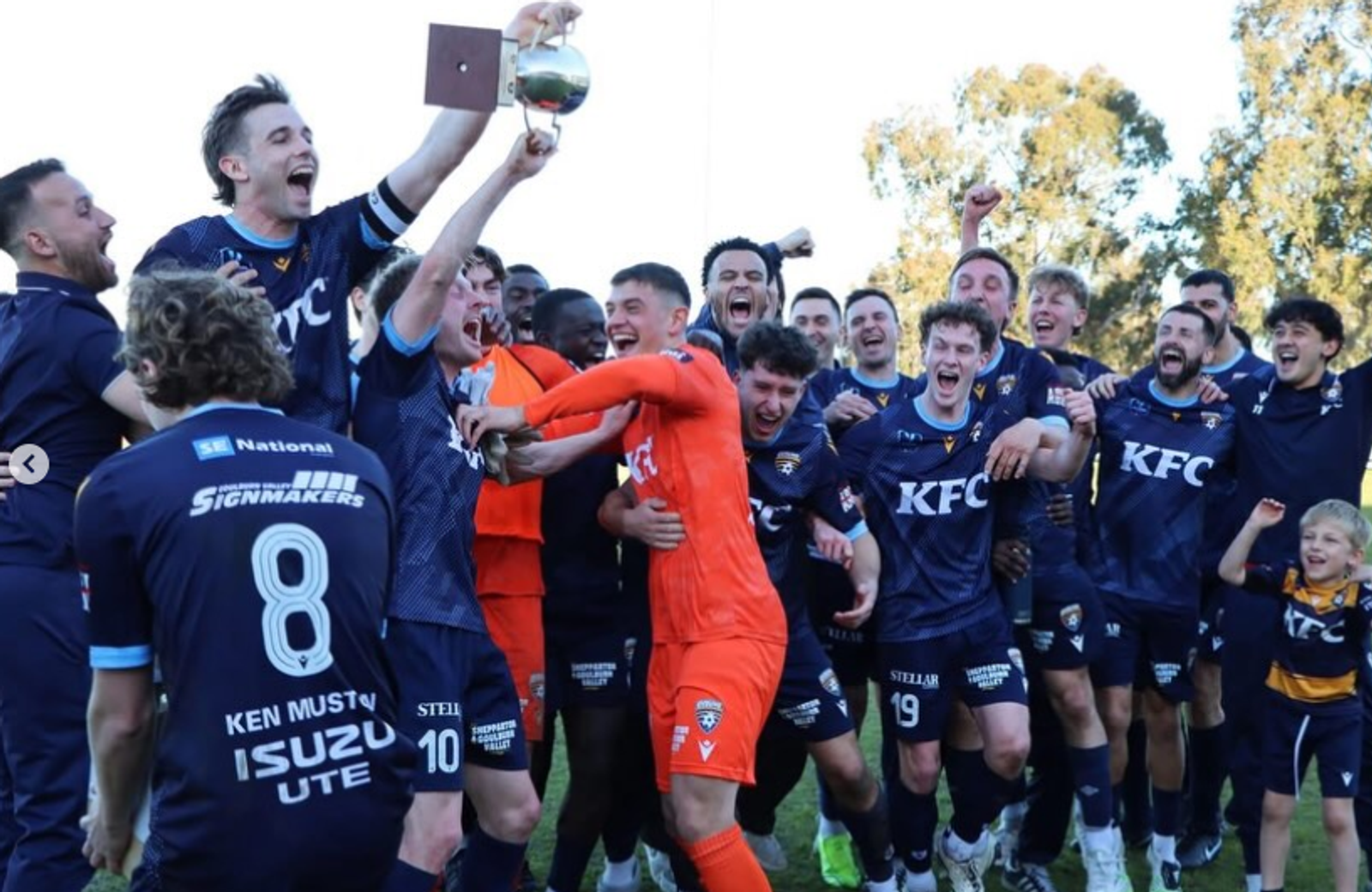
You only have to rewind four years. Craig Carley had taken the reins of GV Suns and saw a club perilously close to their knees.
Players had left, money was tight, relegation had arrived and for a regional club already fighting a battle metropolitan teams rarely have to contemplate, there was genuine uncertainty about what came next.
What GV Suns did next is why their historic promotion to Victoria’s second tier means so much more than moving up a division.
The Suns are VPL2 champions.
HIGHPRESS FEATURE: The smallest club in the NPL behind one of Australian football's hottest strikers
For the first time in club history, they are heading to VPL1 after a season that delivered a maiden league title and the greatest achievement yet for a club that has spent years trying to prove regional football belongs among Victoria’s best.
But this story didn't begin in 2026.
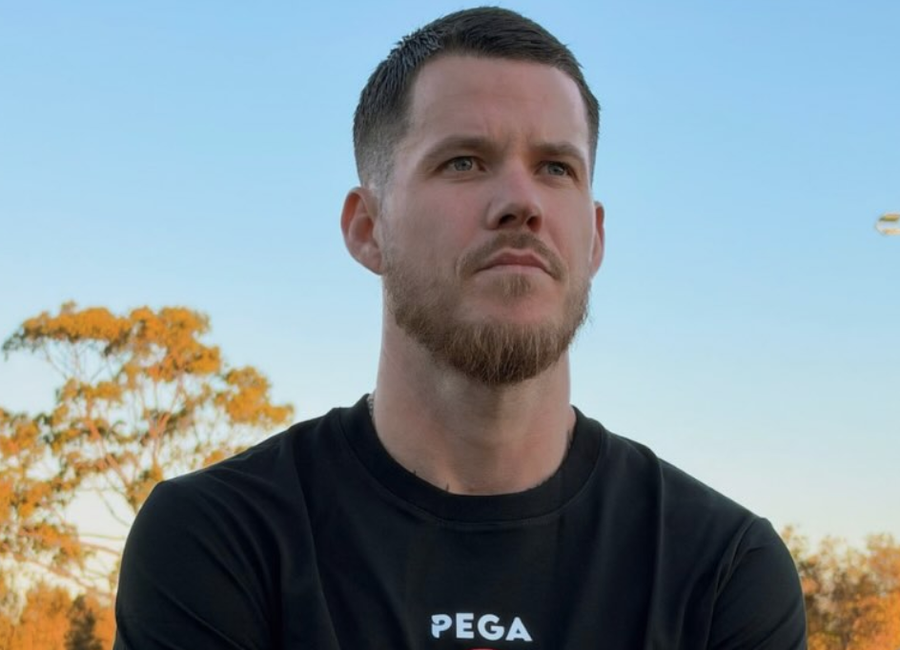
Carley - who is also the Director of Football operations - has been around the Suns almost from the beginning, experiencing the highs and the lows during a journey deeply intertwined with the club.
When a new board reinstated him as senior head coach late in 2022, following relegation, the scale of the challenge quickly became apparent.
“At that point, I genuinely felt the club was close to being on its knees,” Carley told HIGHPRESS.
“There was a lot of uncertainty, but there was also a small group of people who refused to let the club disappear.”
The sun did not set on Goulburn Valley, though. Those people kept them moving.
GV Suns were dealing with financial challenges, player departures and the perennial difficulty of competing with metropolitan clubs capable of offering different opportunities, and the travel - there were 220km road trips for a club more than two hours outside of Melbourne.
Loading embed...
But Carley - a name synonymous with the Suns, and those around him remained convinced there was something worth protecting.
For them, the Suns could never just be about a senior team's results.
“We've always wanted to be more than just a team that wins football games,” Carley said. “We've wanted to build something sustainable, create a genuine pathway for our young players and develop an environment that people are proud to be part of.”
That belief became central to the rebuild.
Rather than compromise on developing footballers from the Goulburn Valley, the Suns doubled down on it.
A core group of players who had progressed through their junior system, eventually became integral members of the senior side.
HIGHPRESS FEATURE: The man who refused to let George Cross be forgotten
They understood the standards, they understood the badge and, crucially, the young players following behind them could look towards the first team and see tangible evidence that the pathway existed.
“What we’ve always tried to create is a club that gives young people in the region an opportunity to dream,” Carley explained.
“You shouldn’t have to leave a regional area at 14 or 15 years of age to have an opportunity to play at a high level.”
“We want to show young players that there is a pathway here and that if they work hard, make sacrifices, play with humility, have the right attitude and are prepared to learn, there is an opportunity for them to progress through our system.”
There may be no greater example than Garang Kuol, who emerged through the Suns pathway before his extraordinary rise eventually carried him into professional football and the Socceroos.
But for Carley, the success of the pathway isn't defined by producing one player. It's about what the existence of the Suns tells every talented young footballer growing up in the region.
“You look at players like Garang and others who have come through our pathway and gone on to achieve great things, and that is what makes me incredibly proud,” Carley said.
“The senior team is the end product of a much bigger picture.
“I think that’s what the Suns represents for the region - opportunity, belonging and a belief that regional players can compete at the highest levels.
“For me, that's always been bigger than winning football games.”
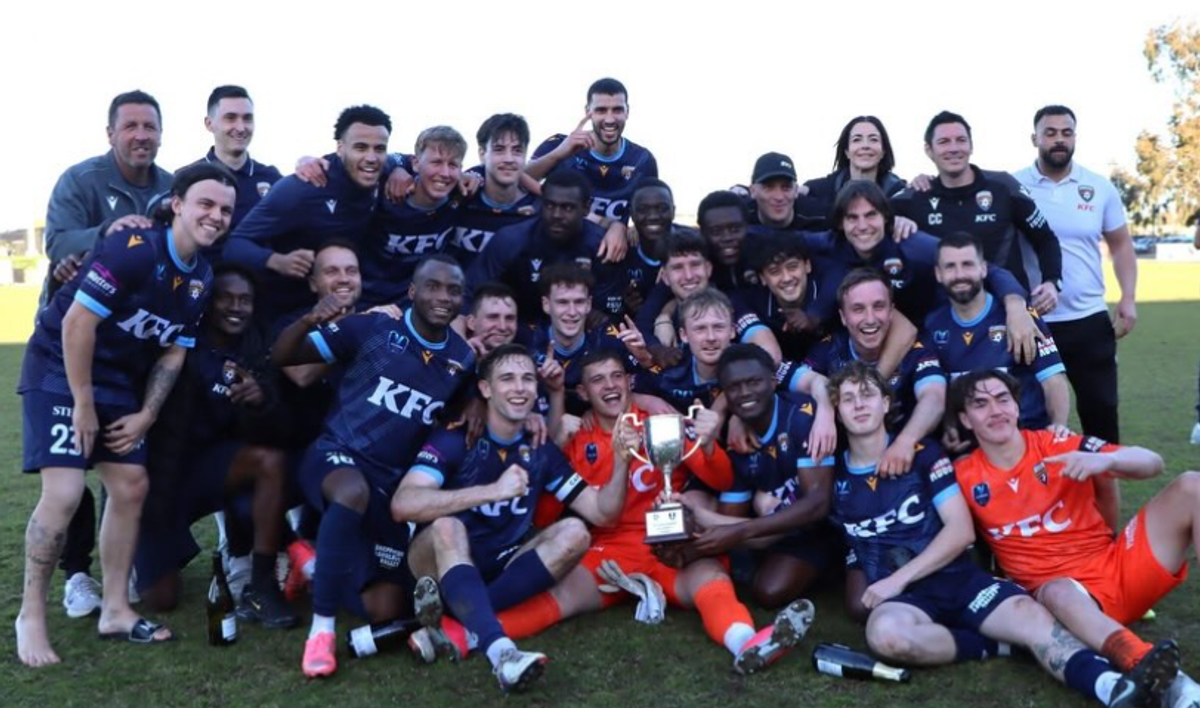
There were no guarantees that philosophy would eventually produce a championship.
The years following relegation required patience: Players had to develop, mistakes were made, some seasons represented progress while others brought another setback.
HIGHPRESS INTERVIEW: Chris Taylor has built winners for decades. Australian football is still overlooking him
Last year delivered perhaps the clearest indication that something was building.
The Suns reached the playoffs and fell short of promotion. They entered 2026 knowing they were close, but also knowing another fiercely competitive VPL2 campaign offered no guarantees.
They didn't respond by reinventing themselves, they trusted what they had built and it resulted in them reigning supreme at the top of a league featuring runners-up and ambitious rivals Malvern City, Bayside Argonauts, Essendon Royals, Keilor Park and Box Hill.
“We stayed true to who we wanted to be as a team and as a club, and eventually the hard work started to pay off,” he said.
“That's probably what I'm most proud of. The players didn't just chase the result; they bought into the standards and the behaviours that we knew would ultimately give us the best chance of achieving the result.”
He added: “It's been a process we've been building for the last few years, and I think this season was really the result of a lot of that work coming together at the right time.”
The players bought in, a tight-knit group developed an increasingly powerful belief in one another and the standards Carley and his staff had spent years establishing.
Then the results followed.
GV Suns embarked on a remarkable 16-game unbeaten run and as the weeks passed, Carley could sense something changing.
“Once we started to build some momentum, you could feel the belief growing within the group,” he said. “We went through an unbeaten period where we genuinely felt like we could beat anyone we came up against.”
“But I think the biggest difference was the belief that the players had in themselves, in each other and in the process.”
Eventually, it paid off in a way GV Suns had never experienced before.
Promotion was secured and the championship followed, one point ahead of Malvern.
For the first time, the Suns could call themselves league champions and for the first time, a club created to provide an elite pathway for footballers in the region had earned their place in Victoria's second tier.
That is why Carley finds it difficult to separate the achievement of 2026 from everything that preceded it.
“There have been plenty of setbacks along the way,” he said. “Relegation at the end of 2022, losing players, financial challenges, trying to compete with clubs with much greater resources and, at times, simply trying to keep the club moving forward.
“There have been seasons where things haven't gone the way we wanted and plenty of moments where it would have been easy to question whether we were actually making progress.”
They kept going anyway.
“We can't control the size of our budget or the fact that we're a regional club competing against metropolitan clubs with plenty of logistical challenges,” Carley said.
“What we can control is our standards, our environment, how hard we work, how we develop our players and how we represent the club.”
It also explains why Carley is reluctant to accept too much credit himself.
Behind GV Suns is a relatively small collection of people doing the work required to keep a regional NPL/VPL program operating and attempting to provide an environment capable of competing with clubs from Melbourne.
Carley believes their contribution can easily be overlooked from the outside.
HIGHPRESS INTERVIEW: He made history. Then he walked away to start again
“There is a small group of people who work tirelessly, day in and day out, to make our environment as professional as possible,” he said.
“They don't always get the recognition they deserve, but without those people none of this happens.”
One person he insists on recognising is Jacqui Retzos, who handles much of the club's day-to-day operation.
“Jacqui is the absolute Queen and backbone of this club and without her none of this would ever be possible,” Carley said.
“This achievement belongs to them just as much as it belongs to the players and coaching staff.”
For Carley, that collective effort is what makes putting the Suns on the map particularly satisfying.
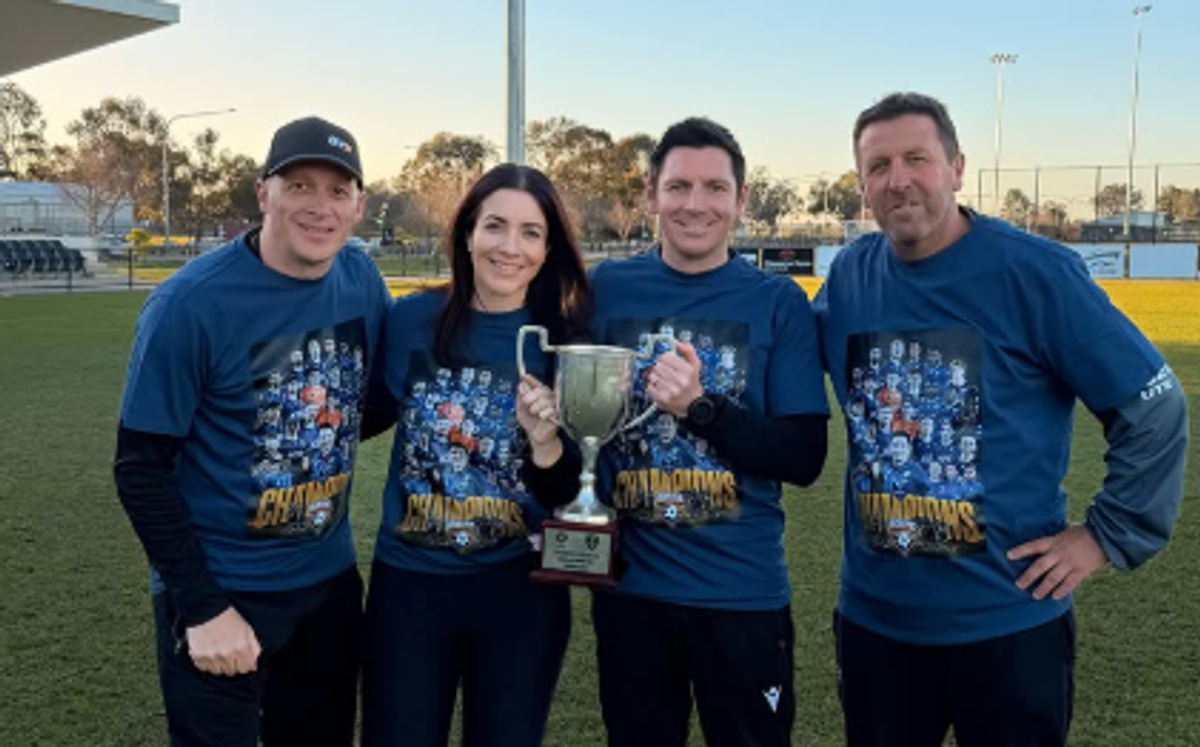
“We're a regional club competing in a very competitive environment, and sometimes I don't think people outside the region fully understand just how much work goes on behind the scenes to allow us to compete at this level,” he said.
“Promotion and a championship aren't just the result of what happened over the last six months. They're the result of years of people putting their time, energy and belief into this club.
“This is for the people who backed the club, backed the vision and kept turning up when things were difficult.”
The next challenge might be their biggest yet.
VPL1 brings bigger clubs, greater budgets and players who have competed at high levels - In 2027, it will see powerhouse Green Gully, Dandenong Thunder and Bentleigh Greens drop down from NPL VIC.
The Suns will enter unfamiliar territory as newcomers to Victoria's second tier, but promotion isn't about finally reaching the destination Carley envisioned and abandoning the formula that got them there.
Quite the opposite.
The pathway remains fundamental. So does developing local talent and Carley still wants his side playing the same brave, aggressive, front-foot football that carried it through VPL2.
“We've never really been interested in taking shortcuts,” he said.
“The goal is to continue building a sustainable football program. We want to keep developing our young players, strengthen the pathway from our juniors into the senior program and make the Suns a destination for talented players from across the region.”
Perhaps most tellingly, Carley doesn't intend to judge the next chapter purely by a league table.
“If in a few years' time we're still producing our own players, competing strongly at that level and creating an environment that people want to be part of, then we'll know we're heading in the right direction.”
How much further can a regional club from the Goulburn Valley go? Carley intends to find out.
“We want to see how far this club can go,” he said. “But we want to do it the right way.”